
Commercial Water Leak Detection Systems
For data centres, server rooms, plant rooms, switch rooms, UPS rooms and tenanted commercial floors where a single undetected water leak costs more than the system that would have caught it. Sensing cable, addressable, point sensor and probe-based systems, designed and installed across the UK by WSD’s own engineers.
This is leak detection for commercial environments where the assets in the room are the reason the room exists. Domestic plumbing, household leaks and home water alarms are a different market with a different problem. If that’s what you’re looking for, we won’t be the right firm. If you’re protecting a data hall, a switch room or a tenanted commercial floor where a leak under the raised floor could take the building offline, read on.
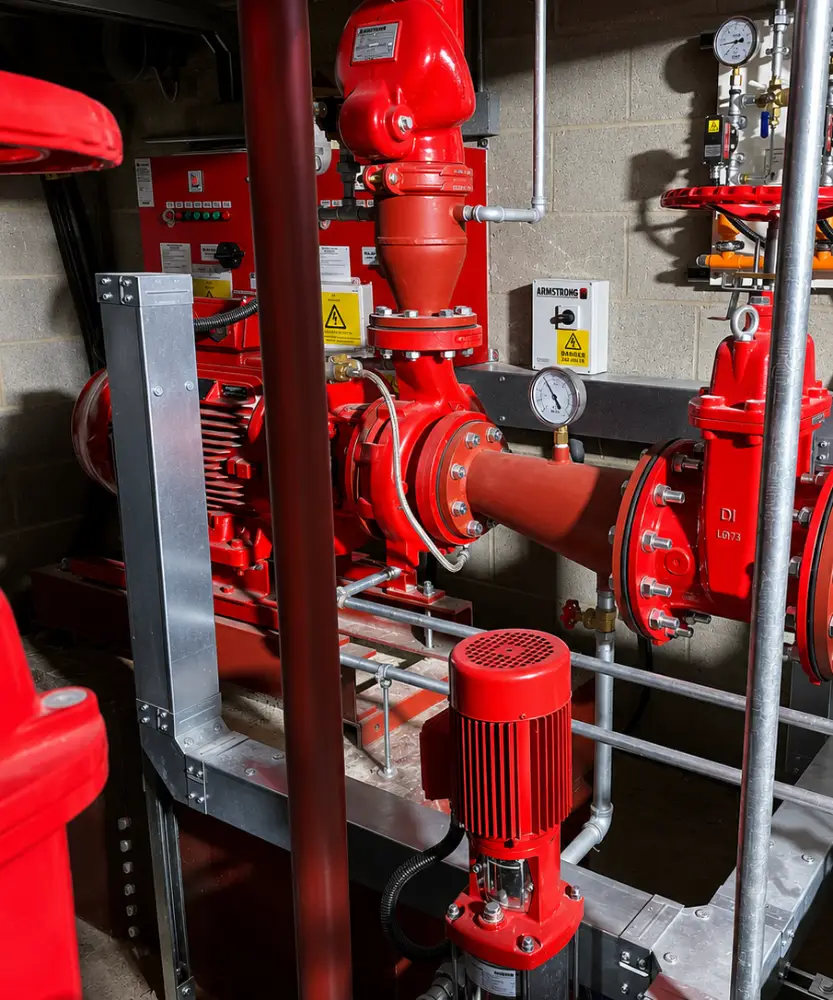
In most environments where we install leak detection, the protected assets are worth orders of magnitude more than the leak detection system itself. A single failed pipe joint above a server hall, an air conditioning leak into a switch room, or a slow drip onto a UPS battery bank all share the same outcome: catastrophic equipment damage, business downtime measured in tens or hundreds of thousands per hour, and an insurance claim with a difficult conversation about whether reasonable preventative measures were in place.
Leak detection is one of those systems where the business case writes itself in the first prevented incident. The hard part is making sure the system is designed, installed and integrated properly so that when an actual leak happens, the alert reaches the right person fast enough for someone to do something about it.

Leak detection technologies we install
Different environments call for different technologies. We install:
- Sensing cable systems – continuous cable run along the at-risk areas (under raised floors, around pipework, along plant room perimeters). Any moisture along the cable’s length triggers an alarm and indicates the location
- Addressable leak detection systems – networked systems where multiple sensors and cables are individually monitored from a central panel, allowing precise location identification across large estates
- Point leak detection sensors – discrete sensors deployed at high-risk points (under cooling units, at drip trays, around chiller bases)
- Water leak detection probes – dedicated probes for specific applications and risk points
Most installations combine more than one technology. Sensing cable for the broad coverage areas, point sensors at known high-risk points, all reporting to a single addressable panel with integration into the building’s wider monitoring strategy.
What a typical leak detection project looks like
Every leak detection project we deliver follows the same broad process. This approach ensures complete protection from initial design through to long-term operation.
Site survey and risk assessment
Identifying critical assets, potential leak sources, environmental conditions and the appropriate technology mix.
System design
Selecting detection technology, cable routing, sensor placement, control panel specification, integration strategy.
Installation
Sensing cable, probes, control panels and interfaces installed by our own engineers.
Integration
Connection to BMS, monitoring systems, alarm interfaces, automated shut-off valves and remote alerting.
Testing and commissioning
Leak detection performance verification, alarm function testing, integration testing, automated response verification.
Training and handover
Client training, full documentation, operational guidance and remedial planning.
Ongoing maintenance
Planned inspection, calibration verification, integrity testing and preventative replacement, included as part of WSD’s wider maintenance contracts or available standalone.

Got questions? We've answered the common ones.
Quick answers on cover, callout times, accreditations and what working with us actually looks like. Still got a question? Get in touch.
What is commercial leak detection?
A system that monitors a defined area (typically a data hall, server room, plant room or raised floor environment) for the presence of water from leaks. Modern systems can identify both the presence and the precise location of a leak, alert site staff via the building’s BMS or directly to nominated contacts, and trigger automated shut-off valves to isolate the leak source before significant damage occurs.
How does sensing cable leak detection work?
A continuous detection cable is laid around the protected area. The cable contains conductors that respond to the presence of water by changing electrical resistance. When the system detects a change anywhere along the cable, it triggers an alarm at the control panel and, in addressable systems, indicates the precise location of the detected moisture.
Can leak detection trigger automatic shut-off?
Yes. The system can be integrated with motorised or solenoid shut-off valves on the supply feeds to the protected area, so that a detected leak triggers automatic isolation. This is particularly valuable in unattended environments where the response time of a human attending site would be too slow to prevent serious damage.
Which leak detection manufacturers do you install?
TTK Leak Detection, TraceTek (nVent Raychem), Aquilar, RLE Technologies, Envirotech Alarms, Honeywell, and other approved specialist providers where the project specification calls for them.
Where is leak detection typically required?
Data centres, server rooms, communications and telecoms rooms, electrical switch rooms, plant rooms, UPS and battery rooms, raised floor environments, tenanted commercial office floors, laboratories and clean rooms. Any environment where the value of the protected assets makes a single undetected leak potentially catastrophic.
Is leak detection a legal requirement?
It isn’t always a legal requirement (unlike fire alarm or emergency lighting), but it’s frequently required by insurers, by tenant lease agreements in commercial buildings, by data centre uptime SLAs, and by the operational risk policies of the businesses operating the protected environments.
How accurate is the pinpoint?
To within ~30cm on a domestic-scale system, ~1–2m on long industrial runs. We mark the location on your floor plan and on the floor itself with chalk or paint pen before we leave site.
What happens if you can’t find the leak?
It happens. If the survey returns no fault, we discount the visit fee against the next survey or against any remediation work we carry out. We won’t bill you in full for a day of guessing.
Do you handle refrigerant leaks as well as water?
Yes — our engineers are F-gas qualified and certified to carry out the leak checks required under Regulation 517/2014. We can also document the test results in a format your maintenance contractor or insurer will accept.
Can you find a leak without taking the floor up?
Almost always, yes. Acoustic correlators and ground microphones pick up the resonance of water escaping under pressure through walls, screed and below-slab concrete. We only resort to invasive testing when the system is depressurised or the pipe material doesn’t carry the signal (some plastics).
Do you cover the whole UK?
Yes, we deliver maintenance contracts and projects nationally from our Bromsgrove HQ. Most of mainland Britain is within a routine response window for reactive maintenance work.
Sites further from the Midlands may have slightly longer response windows for reactive call-outs; we can provide a map of typical response times by area during the initial survey if it’s relevant to your site.