
Fire Safety Servicing & Maintenance
Planned, proactive servicing for the systems your business is legally required to keep working. Fire alarms, emergency lighting, sprinklers, gas suppression, trace heating and fire extinguishers – all maintained in-house by our own engineers, delivered to BS standards, and documented in a digital platform you can actually use.
We cover the whole of the UK from our Bromsgrove head office. Our maintenance division is headed up by Ben South, one of WSD’s three founders, so you’re never more than one call away from the person responsible for your contract.
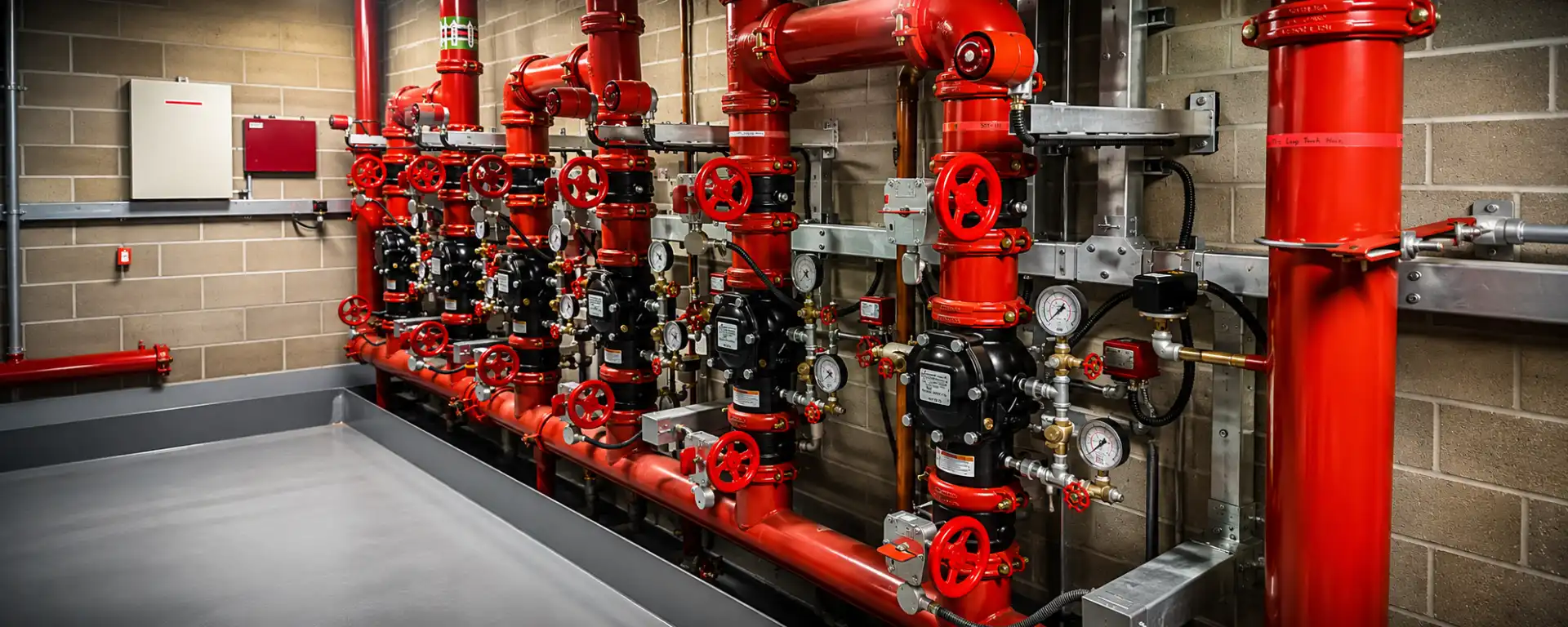
A single WSD maintenance contract can cover any combination of the systems below. You can split them across multiple providers if you’d prefer to, but most of our clients consolidate with us because it means one contract, one logbook, one engineer relationship across every life-safety system on site.
- Fire alarm systems – to BS 5839 across Categories M, L1-L5 and P1-P2
- Emergency lighting – to BS 5266-1 and BS EN 1838, including the monthly flick test and annual 3-hour discharge test
- Sprinkler systems – wet, dry and pre-action, including alarm and monitoring panels
- Gas suppression systems – Novec 1230, FM-200, inert gas (IG-541, IG-55) and CO₂, including cylinder integrity and discharge recovery
- Pre-action and deluge systems – including the full electrical and detection side
- Fire extinguishers – annual inspection, refill and replacement, included as part of your wider maintenance contract rather than priced individually
- Trace heating systems – frost protection health checks, controller diagnostics, cable resistance testing
- Immersion heating systems – inspection, element replacement, controller diagnostics
If a system isn’t on this list and you need it maintained, ask. We probably cover it, and if we don’t, we’ll tell you straight rather than waste your time.
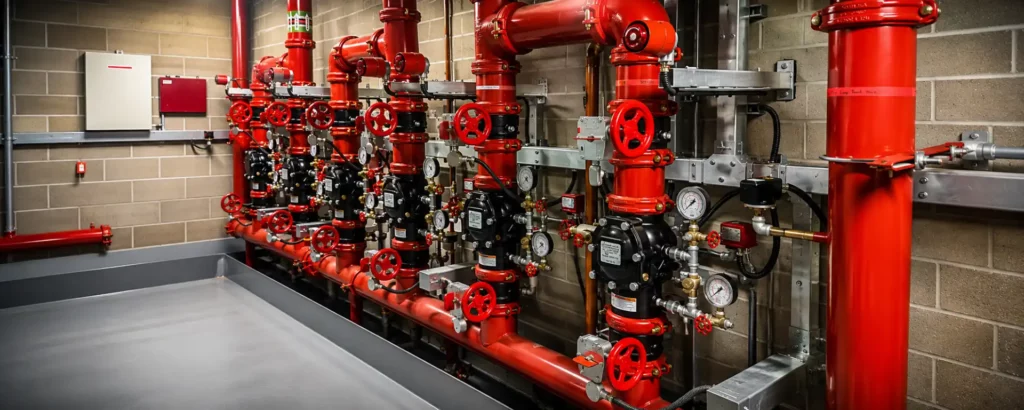
Clear, jargon-free reporting
This is the part of WSD’s maintenance offering that our clients consistently tell us makes the biggest difference.
Three things you’ll get from us that you won’t always get from the bigger national contractors:
- Reports written in plain English. No copy-pasted BS-standard quotations, no “non-compliant – please advise” without explaining what that actually means in your building. If something’s failed, we tell you what failed, what it needs, and what it’ll cost.
- Photographs of defects and completed work. Every defect photographed before we leave, every remedial fix photographed when it’s done. You see what the engineer saw.
- Real-time digital reporting. Service visits, certificates, photos and remedial recommendations live in your dedicated digital platform, accessible to your facilities team, your compliance team, and your insurer. The same place your fire safety logbook lives.
The aim is that a facilities manager who’s never been on site, an insurance assessor, and a building safety officer can all open the same record and see exactly what the state of your fire safety is, without needing to call us to explain it.
What happens on a service visit
Every visit follows the same end-to-end process. No engineer turning up unannounced, no “we’ll see what we find when we get there”, no surprise invoices.
Pre-arrival coordination
Booking confirmation, RAMS, and any permits we need are issued before the engineer leaves the depot.
Site arrival and sign-in
Engineer reports to your nominated site contact and signs in to your systems.
System walkthrough
A review with your site contact of any issues, changes, or concerns since the last visit.
Testing and inspection
Every device tested to the relevant British Standard for the system in question.
Minor fixes and planned PPM work
Anything we can put right on the visit without further parts or sign-off, we do.
Asset condition recording
Every device logged with its current status.
Logbook and digital report updates
Your on-site fire safety logbook is signed off, and the digital report is filed in real time.
Client debrief
Findings discussed with your contact before the engineer leaves, so you’re never waiting on a report to know what’s needed.
Certificates and service reports issued
Sent to your nominated email address, usually the same day.
Remedial works scheduled
Anything that needs follow-up is booked in before the engineer leaves site.
Recent Fire Safety Servicing & Maintenance installs & upgrades.
A small selection of jobs we have delivered or maintain in this area.
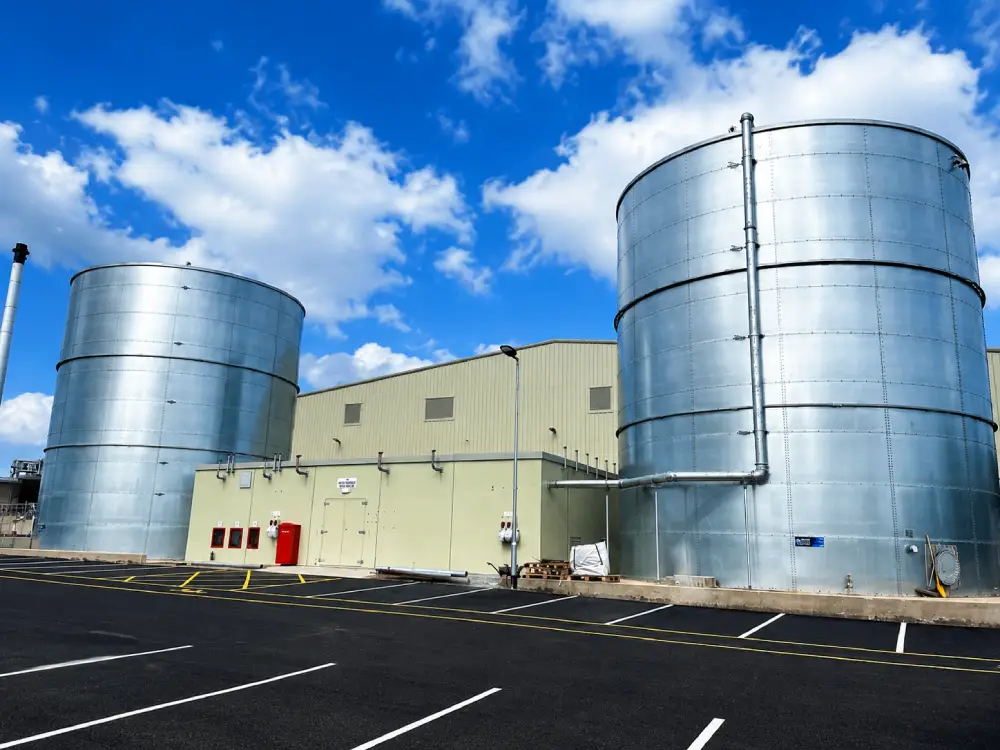
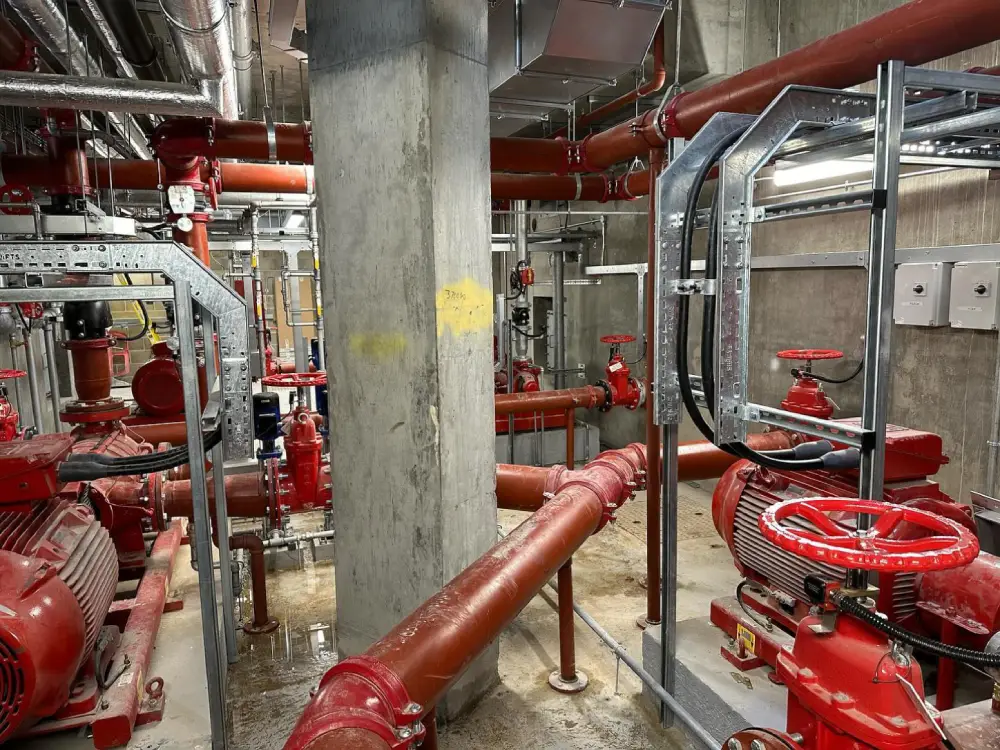
Sherborne MRF Sprinkler Upgrade
Replacement of zone-check systems and upgraded pump controls across a 12,000 m² material recovery facility, completed in two phased weekend shutdowns.
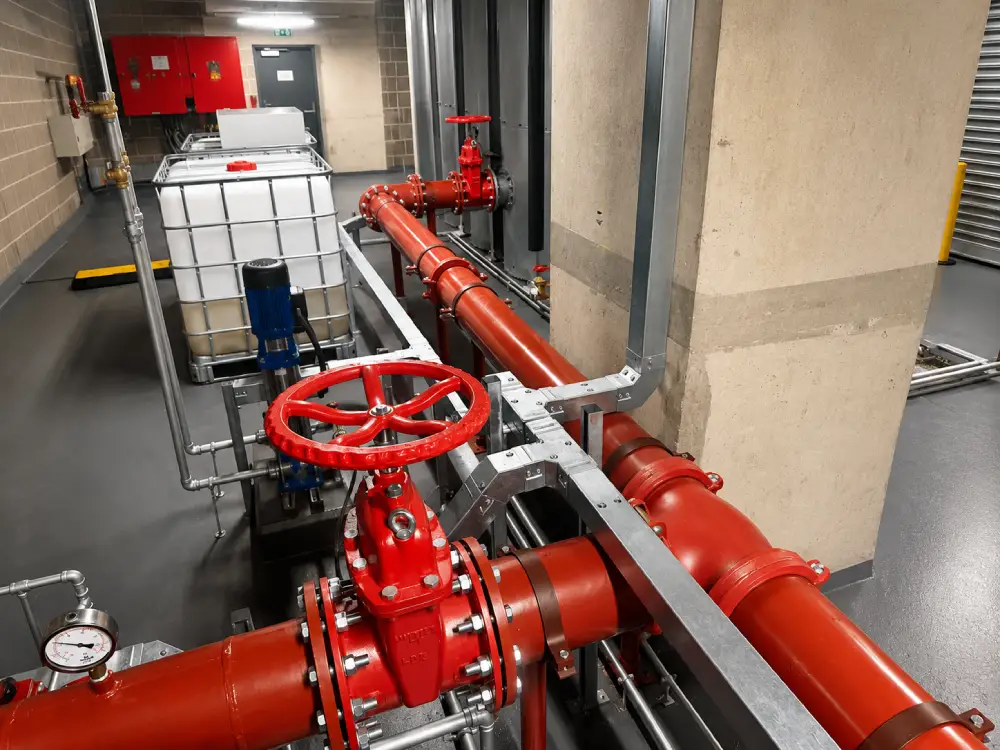
Aldermanbury Square
Aspirating smoke detection across two server halls, with central monitoring and quarterly servicing.
Canning Town
Self-test emergency lighting retrofit across six floors, including monthly compliance reporting.
Got questions? We've answered the common ones.
Quick answers on cover, callout times, accreditations and what working with us actually looks like. Still got a question? Get in touch.
What about fire extinguisher servicing?
Fire extinguishers are included in WSD’s maintenance contracts alongside the rest of your fire safety systems: annual inspection, refill and replacement.
We don’t offer extinguisher servicing as a standalone product because the value comes from having it sit inside a comprehensive maintenance contract rather than as a separate per-unit transaction.
Do you provide a fire safety logbook?
Yes. Every contract client gets a digital fire safety logbook as standard, alongside the physical on-site logbook that the Fire Safety Order requires you to keep.
The digital version is accessible in real time to your facilities team, your insurer and your inspector. Service visits, certificates, photos and remedial recommendations all live in the same place, updated as visits happen.
What’s the difference between maintenance and reactive work?
Maintenance is the scheduled, planned servicing in your contract — quarterly visits, annual full tests, certification and the rest.
Reactive work is anything that arises between visits: a fault, an alarm, a callout. Reactive work for contract clients is prioritised and typically billed at a contract rate. Reactive work for non-contract clients is available case-by-case at standard rates.
How often should sprinkler systems be tested?
Weekly visual checks by your site team, monthly functional tests, and a full annual inspection by a competent contractor in line with BS EN 12845. The annual inspection is what we cover under maintenance contract.
How often should a fire alarm system be serviced?
BS 5839 recommends two inspections per year at a minimum, by a competent person, with a full functional test of every device on at least an annual cycle.
Most of our maintenance contracts are structured around four quarterly visits to spread the workload and keep the system fresh.
Do you provide compliance certificates after a service?
Yes. Every visit ends with a BS-standard compliance certificate, plus a full digital report with photos of any defects and corrective work. Certificates and reports are issued to your nominated email address, usually the same day as the visit, and stored in your digital fire safety logbook for your team, your insurer and your inspector to access.
What does a typical maintenance visit include?
Every WSD service visit follows the same end-to-end process: pre-arrival coordination (booking, RAMS, permits), site arrival and sign-in, system walkthrough with your site contact, testing and inspection to the relevant British Standard, minor fixes and planned PPM work, asset condition recording, logbook and digital report updates in real time, client debrief, certificates issued (usually the same day), and remedial work scheduled before the engineer leaves site.
No engineer turning up unannounced, no surprise scope, no surprise invoices.
How often does emergency lighting need to be tested?
Two tests are required under BS 5266 and BS EN 50172: a monthly functional test (a short “flick test” that confirms every luminaire activates when the mains drops out) and an annual full-duration discharge test (every luminaire tested for its full rated duration, typically 3 hours). The monthly test can be done by site staff with a test key. We typically handle the annual test as part of a maintenance contract.
Do you cover the whole UK?
Yes, we deliver maintenance contracts and projects nationally from our Bromsgrove HQ. Most of mainland Britain is within a routine response window for reactive maintenance work.
Sites further from the Midlands may have slightly longer response windows for reactive call-outs; we can provide a map of typical response times by area during the initial survey if it’s relevant to your site.
Can you take over an existing system installed by someone else?
Yes. We routinely take over the maintenance of systems originally installed by someone else.
We carry out an initial survey and full functional test of the existing system first, give you a written baseline of what’s there and what condition it’s in, then quote against bringing it onto an ongoing maintenance contract. The survey is quoted separately to the contract, so there’s no commitment until you’ve seen the findings.